It sounds backwards: women suffering from hot flashes voluntarily sitting in a 60-90°C Korean kiln sauna. Yet the Korean jjimjilbang tradition (a public bathhouse with multiple themed heat rooms) is built on exactly this paradox. Emerging research on heat shock proteins, particularly HSP70, suggests that controlled, repeated heat exposure can retrain a menopausal woman’s thermoregulatory system over weeks — reducing the intensity and frequency of vasomotor symptoms while also lowering blood pressure and easing sleep. This guide walks you through the Korean tradition, the science, and a beginner-safe protocol you can adapt at home or in a US Korean spa.
The Korean Jjimjilbang Tradition — And Why Heat Matters for Menopause
The Korean jjimjilbang (literally “poultice room”) is a gender-separated public bathhouse paired with a unisex floor of communal heated rooms, sleeping mats, and snack bars. The format took off across South Korea in the 1990s, but the underlying heat therapy tradition is centuries older. The first written records of hanjeungmak (Korean kiln saunas) appear in the Annals of Sejong from the 15th-century Joseon Dynasty, where they are described as medicinal rooms used to draw out illness through sweat.
From Joseon-era kilns to modern wellness clubs
The oldest format is the bulgama, a domed clay-and-stone kiln originally used for firing charcoal. Once the charcoal was removed, residual wall heat could exceed 80°C, and villagers entered the cooling kiln wrapped in wool to sweat. Today’s jjimjilbang preserves this architecture in miniature: low, igloo-shaped rooms lined with charcoal, jade, salt, or ochre clay, each maintained at a specific temperature for a specific physiological effect.
How jjimjilbang differs from Finnish or infrared saunas
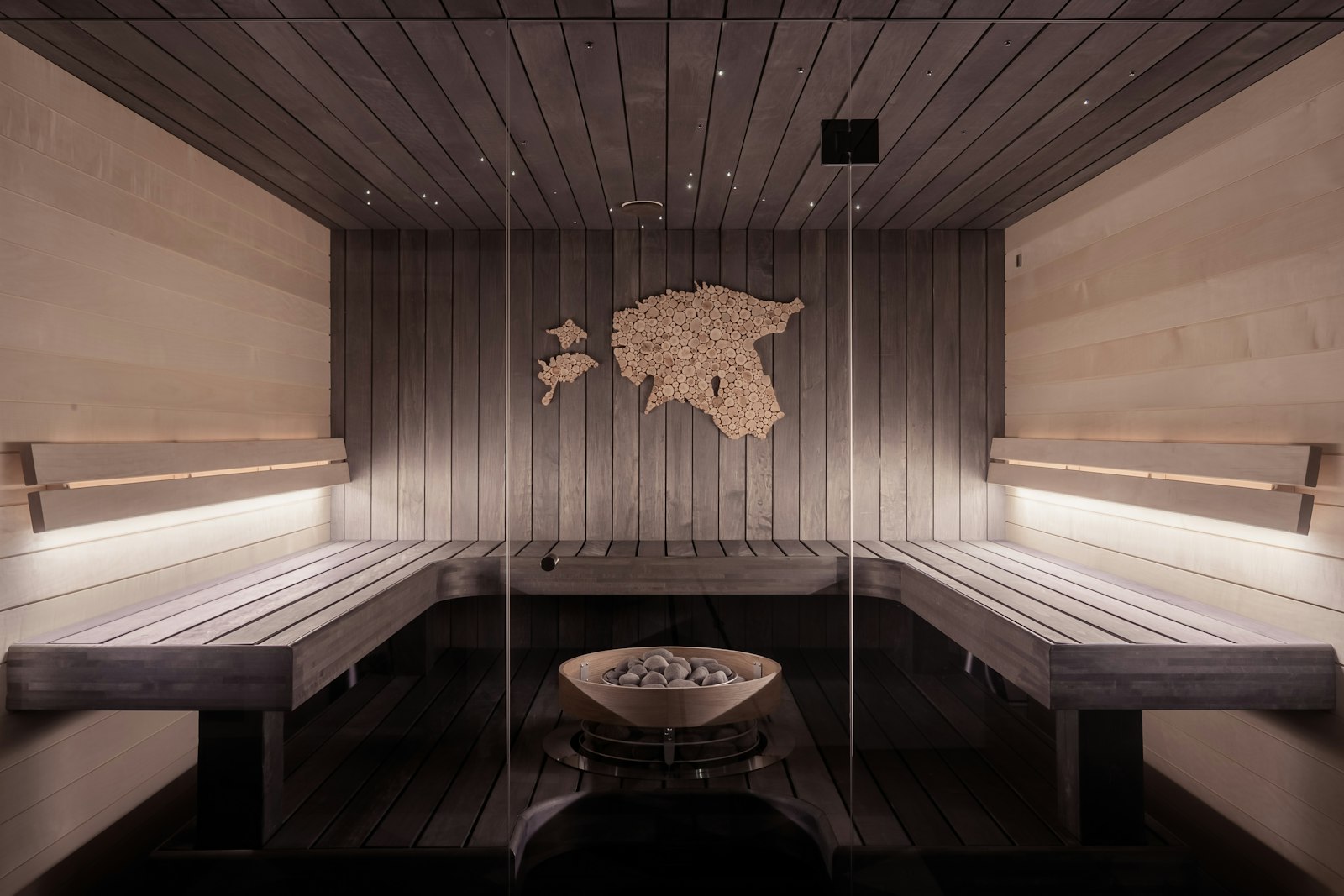
Three things set jjimjilbang apart. First, you cycle through multiple rooms at different temperatures rather than sitting in one box. Second, the heat is mostly conductive and radiant from heated stone, clay, or ondol floors — not the steam-and-rock convection of a Finnish sauna. Third, the cultural norm is much longer total stays (2–4 hours), with frequent cool-downs between heated sessions. This cycling pattern is what makes jjimjilbang interesting for menopausal thermoregulation specifically.
The Counterintuitive Science: How Heat May Reduce Hot Flashes
For decades the standard advice for hot flashes has been to avoid heat — layered clothing, cool bedrooms, no spicy food. The newer view is more nuanced: brief, intentional, repeated heat exposure may actually recalibrate a malfunctioning thermoregulatory system rather than provoke it. The mechanism centers on a family of stress proteins called heat shock proteins.
The HSP70–estrogen axis
Estrogen is a powerful inducer of heat shock protein 70 (HSP70), an anti-inflammatory chaperone that helps cells survive thermal and oxidative stress. When estrogen plummets at menopause, baseline HSP70 falls with it — and a 2017 review in Human Reproduction Update proposed that vasomotor symptoms themselves may be an evolutionary attempt to re-trigger the HSP70 pathway through the only remaining lever the body has: heat (Newsholme & de Bittencourt, Human Reproduction Update, 2017). The therapeutic implication: deliberate heat exposure could restore HSP70 externally, reducing the body’s need to generate hot flashes on its own.
Thermoregulatory remodeling and the narrow thermoneutral zone
Menopausal women have a narrowed thermoneutral zone — the core-temperature range in which the body neither sweats nor shivers. Even a 0.1°C rise can trigger a flush. Endurance heat exposure has been shown to widen this zone by improving sweat response, plasma volume, and skin blood flow control. The hypothesis under active study is that the same adaptation in menopausal women would mean fewer hot flashes from ordinary daily temperature swings.

Clinical Evidence on Sauna Bathing and Vasomotor Symptoms
The direct trial evidence on saunas for menopause is still small, but two adjacent bodies of literature are highly relevant.
What human trials show on heat and menopause
A 2011 randomized trial published in Menopause found that local far-infrared thermal therapy applied twice weekly for 20 minutes over 12 weeks reduced menopausal symptom scores, including hot flashes and sleep disturbance, compared with controls (Beever, Menopause, 2011). Larger Finnish observational data on sauna habit (regardless of menopause status) consistently show improved vascular reactivity, lower resting blood pressure, and better sleep continuity. The 2018 Mayo Clinic Proceedings review of sauna bathing concluded the cardiovascular benefits are biologically plausible and dose-dependent (Laukkanen et al., Mayo Clinic Proceedings, 2018).
Cardiovascular and mood co-benefits
For midlife women, two co-benefits matter as much as hot flash relief. First, blood pressure: a single 30-minute sauna session can drop systolic BP by roughly 19 mmHg and diastolic BP by 6 mmHg in the hour after exposure, with smaller but sustained changes after weeks of regular use. Second, mood and sleep: repeated heat exposure raises beta-endorphin and modestly elevates body temperature in a pattern that mimics moderate aerobic exercise, both linked to better sleep onset that night. For perimenopausal women who can’t safely take HRT, this combination is meaningful.
Important caveat: the 2023 Menopause Society Nonhormone Therapy Position Statement does not currently recommend sauna or heat therapy as a primary treatment for vasomotor symptoms — the trial base is too small. Treat heat therapy as a complementary practice for general wellbeing, not a substitute for medically indicated treatment.
Inside a Jjimjilbang: The Specific Rooms and Temperatures
Walk into any well-run Korean jjimjilbang and you will see a circular layout of five to ten themed rooms, each labeled with its temperature and the mineral or material lining its walls. Knowing what each room is for helps you build a sensible rotation rather than baking yourself in the hottest one available.
The standard mineral rooms
The most common are hwangtobang (yellow ochre clay, 50–60°C, the gentle starter room), sogeumbang (salt room, 40–55°C, popular for skin and respiratory comfort), jadebang (jade-lined, ~50°C, marketed for circulation), and sutbang (charcoal room, 50–60°C, dim and aromatic). Typical stay is 10–15 minutes per room with a cool-down between.
The bulgama high-heat kiln and the ice room
The signature room is the bulgama, a domed kiln-style chamber heated by burning pine or oak inside the structure before guests enter. Temperatures run 70–90°C — hotter than a typical Finnish sauna — and visitors stay only 5–8 minutes per round in linen or hemp garments. The intended counterpart is the eolumbang (a true ice room near 0°C) or a cold plunge pool. This contrast cycling is what gives jjimjilbang its distinct effect on vascular tone.
A Safe Beginner Protocol for Midlife Women
Heat therapy is not risk-free, especially in your 50s and 60s. Cardiovascular disease, uncontrolled hypertension, recent surgery, anticoagulant medication, or pregnancy can all make sauna use unsafe. With your clinician’s green light, the following four-week protocol is a conservative on-ramp.
Frequency, duration, and hydration
Start with one session per week, no more than 8 minutes in any single hot room and no more than 25 minutes total heat exposure. Cool down with 3 minutes under a cool (not cold) shower between rooms. By week four, most women can comfortably tolerate two sessions per week with up to 12 minutes in a moderate room (around 55°C). Drink 500 mL of water with a pinch of salt or an electrolyte tablet before, during, and after each visit — you can lose 0.5 to 1 L of fluid per session even though you may not feel thirsty.
When to skip the sauna entirely
Skip the session if you have a fever, an active hot flash cluster, fresh alcohol in your system, low blood pressure, dehydration, or have just taken a sedating medication. The Mayo Clinic and the American Heart Association both flag concurrent alcohol as the largest avoidable risk in sauna use. Listen to dizziness, nausea, or visual changes as a hard stop — leave the room, sit down in cool air, and rehydrate. If symptoms persist beyond 10 minutes, call your clinician.
For a clinician-reviewed overview of sauna safety in women, see the Mayo Clinic guidance on sauna use.
Building a Jjimjilbang-Style Routine Outside Korea
You don’t need to fly to Seoul to get most of the physiological benefit. The two key elements are (1) cycling between heat and cool, and (2) consistency over weeks. Both can be replicated in most US metros.
Adapting at home
If your gym or community pool has a steam room or dry sauna, you already have the basic kit. A workable home-equivalent cycle is 8 minutes in the sauna, 2 minutes in a cool shower, repeated three times — about 30 minutes total. Far-infrared blankets and portable infrared sauna tents reach 50–65°C and replicate the lower-heat mineral rooms reasonably well. Avoid unsupervised use if you have implanted electronics or a history of heat intolerance.
Finding Korean spas in the US
Authentic jjimjilbang are concentrated in Korean-American population centers: King Spa & Sauna in Dallas–Fort Worth, Spa Castle in Queens, Wi Spa in Los Angeles, and Olympus Spa near Seattle. Most are 24-hour, flat-fee operations, so a single visit lets you sample several rooms. A weekday morning is the best first trip — quieter, rooms at full temperature, easy to leave if anything feels off.
FAQ
Can sauna use actually trigger a hot flash during the session?
Yes, especially in the first few weeks. A flush during heat exposure is expected and not dangerous on its own. What matters is whether your overall daily hot flash count drops over four to eight weeks of consistent practice. If it doesn’t, sauna therapy may not be the right tool for you.
Is infrared sauna better than traditional dry sauna for menopause?
The 2011 randomized trial on heat therapy and menopause symptoms used far-infrared. Infrared penetrates skin slightly more deeply and feels less oppressive than a 90°C dry sauna, which is helpful if you are new to heat exposure. There is no head-to-head trial proving one is better than the other for vasomotor symptoms specifically.
How often should I go to get a measurable effect?
Observational data on Finnish sauna users suggests a threshold around 2 to 3 sessions per week for cardiovascular benefits, with continuing dose-response up to 4 to 7 sessions per week. For menopause symptoms, start at 1 to 2 sessions per week and reassess at four weeks; benefits typically appear before eight weeks if they will appear at all.
Are there any women who should avoid jjimjilbang entirely?
Yes. Avoid if you have uncontrolled hypertension, recent myocardial infarction or stroke, unstable angina, severe aortic stenosis, are in early pregnancy, have an open wound or active skin infection, or are on medications that impair heat dissipation (such as anticholinergics or some psychiatric medications). When in doubt, ask your healthcare provider before starting.
Does the “detox sweat” claim hold up scientifically?
Not really. The kidneys and liver clear nearly all metabolic and environmental toxins; sweat contains mostly water and sodium with trace amounts of urea and a few heavy metals. The real benefits of jjimjilbang are vascular, neuroendocrine, and psychosocial, not detoxification. Skip vendors who lead with detox marketing.
Medical disclaimer: This article is for general educational purposes only and is not medical advice. Heat therapy carries real cardiovascular and dehydration risks, particularly in midlife and older women. Always consult your healthcare provider before starting a new sauna or heat-therapy routine, especially if you have any cardiovascular condition, are on prescription medication, or are managing menopause symptoms with hormone therapy.